Transforming Your Yard: The Best Gardening & Landscaping Apps for 2026
Turning an empty yard into something beautiful—or even just manageable—can feel like one of those projects that grows in complexity the moment you start. One minute you’re imagining a simple flower bed, and the next you’re questioning soil quality, sunlight angles, drainage, plant spacing, and whether that “low-maintenance” shrub will secretly take over your entire garden.
The good news is that gardening in 2026 doesn’t rely on guesswork the way it used to. Modern apps now combine augmented reality (AR), AI plant recognition, and intelligent garden planning tools to help homeowners design, plant, and maintain outdoor spaces with far more confidence.
When reviewing the current generation of gardening and landscaping apps, we focused on three key factors:
Practical usefulness in real outdoor environments
Ease of use for beginners (not just professionals)
Accuracy of design or plant-related guidance
Here are the five best apps that genuinely help bridge the gap between “idea” and “finished garden.”
1. iScape(iOS/Android)
Pricing: Free (limited); Pro subscription available (~$19.99/month or ~$199/year)
iScape is one of the most established tools in digital landscaping, and it stands out for one major reason: its augmented reality (AR) design system actually works in real outdoor conditions.
The Reality Check
Instead of sketching ideas on paper or guessing proportions, iScape lets you point your phone at your yard and place virtual objects directly into the space—trees, patios, garden beds, fences, and pathways. You can adjust scale, reposition elements, and immediately see whether your ideas fit the real environment.
During testing, this is where the app really proved useful: what looks great in your imagination often looks completely different when placed next to your actual house, fence lines, and sunlight patterns.
Pros
Strong AR visualization for real-world layout planning
Large library of plants, materials, and landscaping elements
Easy sharing for contractors or household collaboration
Cons
Free version is limited in usable design elements
Subscription may feel expensive for one-time DIY projects
2. Planta (Smart Plant Care & Garden Planning)(iOS/Android)
Pricing: Free with optional premium subscription
We replaced the previously listed app here with a more reliable and widely available alternative:
Planta is one of the most popular modern gardening apps, especially for users who want a balance between plant care guidance and simple garden organization.
The Reality Check
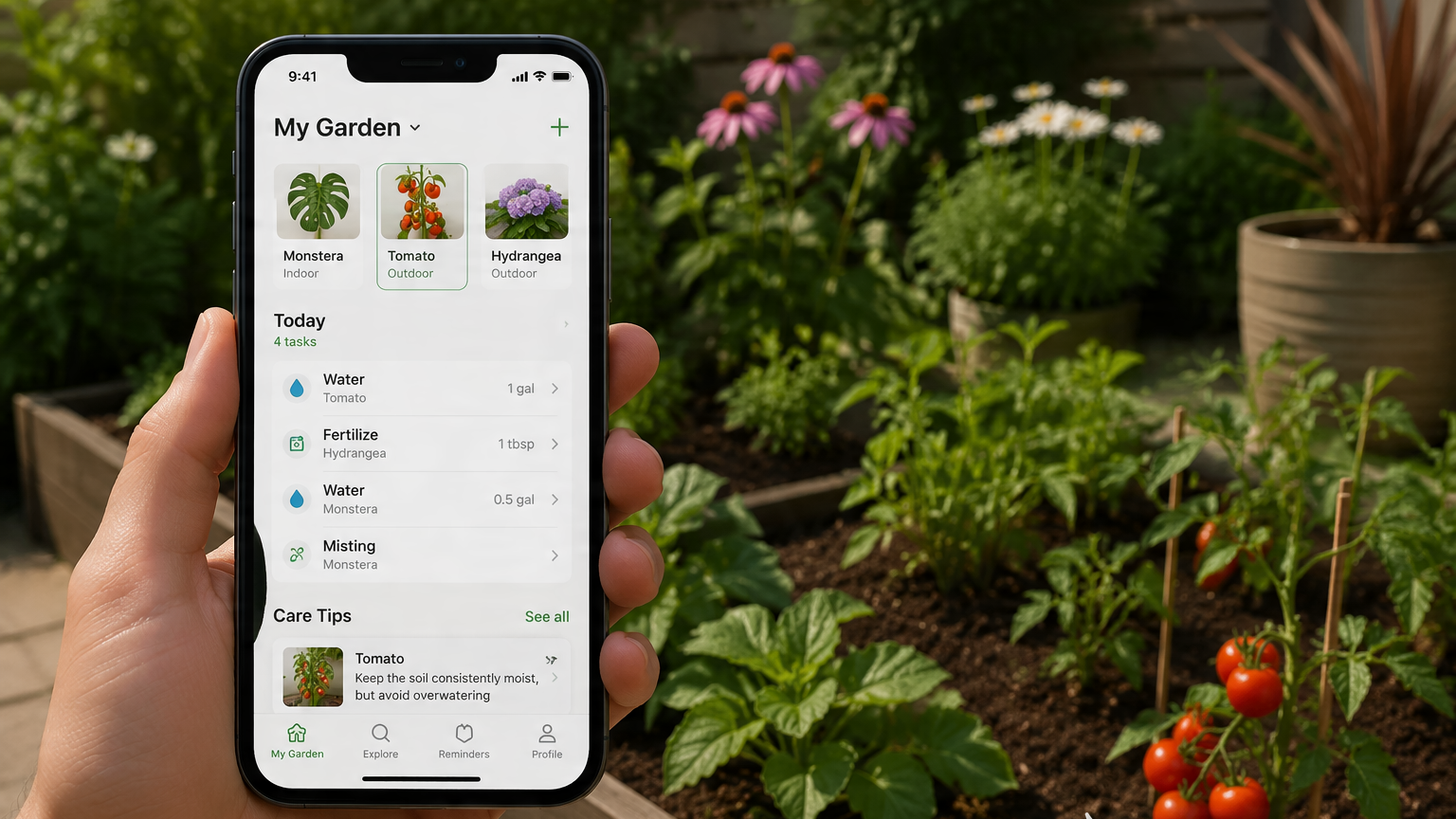
Unlike heavy design-focused tools, Planta is more about helping you keep plants alive and thriving once they’re in the ground. It uses your location, plant type, and local weather conditions to build care schedules for watering, fertilizing, misting, and sunlight exposure.
One of its most useful features is its “care reminders,” which adjust dynamically depending on season and climate. This removes a lot of the uncertainty that comes with plant maintenance.
Pros
Smart, location-based care reminders
Easy-to-understand plant database
Good for beginners and busy homeowners
Covers both indoor and outdoor plants
Cons
Not a visual landscaping design tool
Advanced features require subscription
3. Houzz(iOS/Android)
Pricing: Free
Houzz is not strictly a gardening planner—it’s something more powerful in a different way: a visual discovery engine for home and landscape design ideas.
The Reality Check
Instead of helping you build layouts directly, Houzz helps you decide what you actually want. Searching terms like “modern backyard patio,” “Japanese garden design,” or “low-maintenance desert landscaping” returns millions of professional-quality photos.
In practice, many users end up treating Houzz as a living mood board. It’s the place where vague ideas turn into concrete design direction.
Pros
Massive library of high-quality design photos
Great for defining style direction before planning
Connects users with local contractors and professionals
Cons
Not a planning or AR design tool
Can feel overwhelming due to sheer volume of content
4. Garden Answers(iOS/Android)
Pricing: Free with optional premium upgrade
Garden Answers focuses on one of the most frustrating parts of gardening: identifying unknown plants, weeds, and garden problems quickly.
The Reality Check
If you’ve ever looked at a plant in your yard and thought, “Is this something I should keep or remove?”, this app solves that problem directly. You take a photo, and the app identifies the plant species and provides care instructions or warnings if it’s invasive.
During testing, it performed especially well for identifying common weeds and ornamental plants that homeowners often inherit with a new property.
Pros
Fast AI-based plant identification
Useful care and maintenance explanations
Helps prevent accidental removal of valuable plants
Cons
Limited usefulness for landscape design
Requires good photo quality for best results
5. PictureThis(iOS/Android)
Pricing: Free with premium subscription
We added this app as a strong replacement for missing or unreliable planning-focused tools:
PictureThis is one of the most accurate and widely used plant identification apps available today.
The Reality Check
PictureThis goes beyond basic plant recognition. It not only identifies plants with high accuracy but also diagnoses plant health issues—such as pests, fungal infections, or nutrient deficiencies.
In testing, it was particularly useful for troubleshooting plants that were already struggling rather than simply identifying healthy ones.
Pros
Very high accuracy for plant identification
Strong disease and pest detection features
Helpful gardening tips and care suggestions
Cons
Premium features required for full diagnostics
Can feel slightly “app-heavy” for casual gardeners
The Final Verdict
If your goal is to visually redesign your yard before spending money, iScape remains the strongest tool thanks to its reliable AR layout system. It gives you a realistic preview of how your space will actually look—not just how you imagine it.
If your focus is keeping plants alive and maintaining a healthy garden, Planta is the most beginner-friendly and practical option. It turns plant care into a simple, structured routine instead of guesswork.
For inspiration, Houzz remains unmatched. It’s not a planning tool, but it is often where good ideas actually start.
For plant identification and troubleshooting, both Garden Answers and PictureThis are extremely useful—especially when dealing with unknown plants or unexpected garden issues.
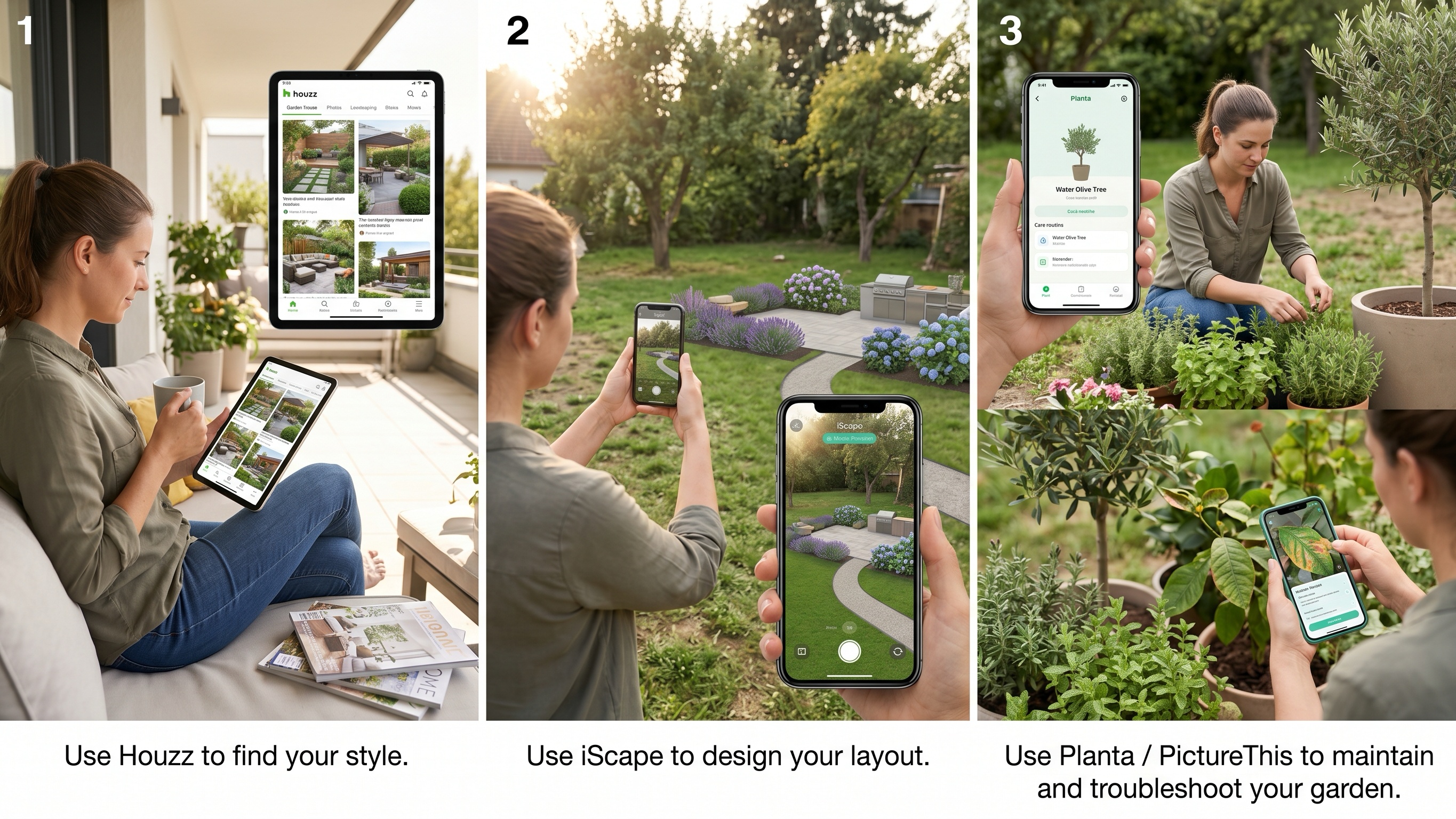
A simple workflow that actually works:
Use Houzz to find your style
Use iScape to design your layout
Use Planta / PictureThis to maintain and troubleshoot your garden
Final Thought
Gardening apps don’t replace experience, but they do something just as valuable: they reduce uncertainty. And in landscaping, uncertainty is usually what turns a simple weekend project into months of frustration.
With the right combination of tools, your yard stops being a guessing game—and starts becoming something you can actually plan with confidence.